
How to Tell When “Growth” Stops Being Productive
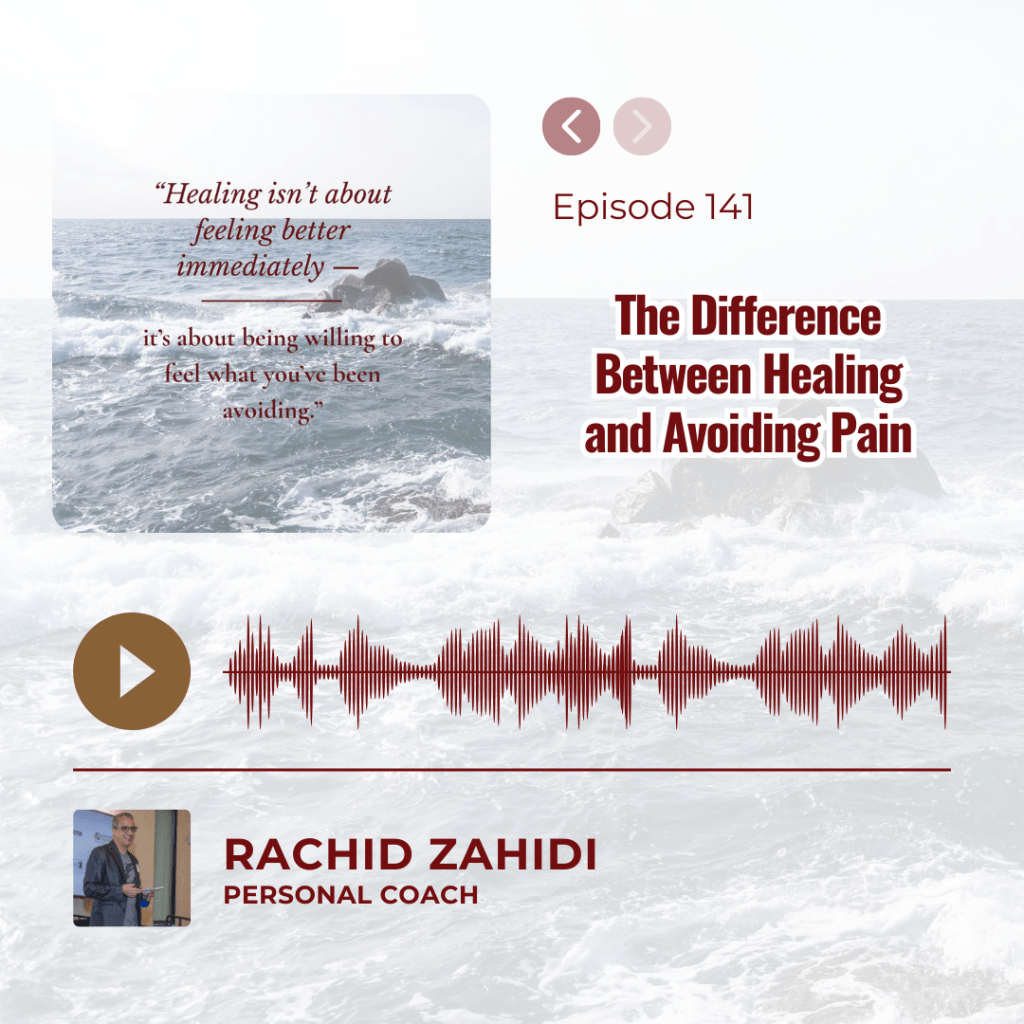
In this episode of the Resilience Across Borders podcast, host Rachid Zahidi explores the critical distinction between genuine healing and pain avoidance. While self-improvement is often seen as a universal good, Rachid warns that it can sometimes serve as “pain management in disguise”—a way to move around discomfort rather than through it.
Key concepts explored in this episode:
- The 90-Second Rule: Rachid introduces a practical exercise for journaling or meditation: identifying an avoided feeling and sitting with the physical sensations for 60–90 seconds without analysis. This process allows the emotion to be processed rather than suppressed.
- Healing vs. Avoidance: True healing reduces the emotional charge of a trigger over time. Avoidance, by contrast, merely buries pain beneath a layer of intellectual understanding or temporary calm.
- Behavioral Transformation: A major theme of the discussion is that healing changes behavior, while avoidance only changes language. Rachid emphasizes that recognizing a pattern (like anxious attachment) isn’t the goal—the goal is changing the action (choosing not to chase).
- Truth Over Comfort: The episode challenges listeners to increase their tolerance for uncomfortable truths. Rachid cautions against “spiritualizing” toxic dynamics—viewing fear-based decisions as meaningful destiny—and encourages sitting with difficult admissions instead.
- The Simplicity of Closure: Ultimately, healing leads to a calmer nervous system and simpler boundaries. To test your progress, Rachid suggests a seven-day “self-help fast” to see what emotions surface in the silence.
🎓 What You’ll Learn in This Episode:
- The Self-Improvement Trap: Why some forms of “personal growth” are actually sophisticated ways of avoiding pain rather than healing it.
- Identifying Avoidance: How to tell the difference between moving through discomfort and moving around it.
- Measuring Progress: Tools for tracking emotional reactivity and determining if your “triggers” are truly losing their charge.
- Transformation vs. Intellectualization: Why changing your vocabulary (using buzzwords) is not the same as changing your behavior.
- The “Spiritual Bypass”: How to stop using “meaning-making” or spirituality to justify staying in toxic or fearful dynamics.
💡 Key Takeaways:
- Healing Moves Through: Genuine healing requires sitting with uncomfortable sensations in the body for 60–90 seconds without the need to analyze or “fix” them.
- Actions are Evidence: Awareness is only the first step; true healing is reflected in the concrete actions you take differently, such as setting a boundary you used to ignore.
- Simplicity is the Goal: Real healing leads to closure and a calmer nervous system, whereas avoidance often leads to endless processing and constant “self-work”.
- Truth Over Comfort: Healing increases your capacity to tolerate difficult truths, even when they disrupt your immediate emotional comfort.
🧘 Practical Reflections
- The 90-Second Sit: During your next meditation or journaling session, ask: “What feeling am I trying to avoid right now?” Locate the sensation in your body and sit with it for 90 seconds without trying to change it.
- The Trigger Tracker: Identify a recurring trigger (like criticism). Rate its intensity from 1–10 over the next few weeks. If the number isn’t coming down, you may be suppressing the pain rather than healing it.
- The Behavior Test: Look at a recent “insight” you had. Ask yourself: “What concrete action am I taking differently because of this awareness?” If nothing has changed in your behavior, you are likely just changing your language.
- The Silence Challenge: Take a seven-day break from all new self-help content (podcasts, books, videos). Observe what emotions surface when you stop the “input” and are left with the silence.
💬 Quotes from the Episode
- “Healing moves through discomfort, while avoidance moves around it.”
- “Not all self-improvement is true healing; sometimes, it is simply pain management in disguise.”
- “Insight alone is not transformation… healing changes behavior, while avoidance only changes language.”
- “Recognizing an anxious attachment is not healing; choosing not to chase someone who withdraws is.”
- “Real healing leads to simplicity and closure, while avoidance results in endless processing.”
- “Be kind to yourself, be kind to others, and stay resilient.”
Featured Tool
The EMO Gym Journal (Emotional Gym)
A guided workbook designed to help you gain clarity, stay focused on your priorities, build better habits, and track both growth and rest.
Resources & Links
- 📘 EMO Gym Journal — Available on Amazon
- 🌐 Blog & Episodes: resilienceacrossborders.com
- 🎧 Resilience Across Borders Podcast — New episodes weekly
If this episode resonated with you, please:
- Share it with someone who needs permission to pause
- Leave a review to help others find the podcast
- Subscribe so you don’t miss future episodes
Remember: be kind to yourself, be kind to others—and stay resilient. 🌊✨
Listen on Apple Podcasts/ iTunes:
Listen on Spotify:
 The Blog of Rachid Zahidi
Leave a comment