
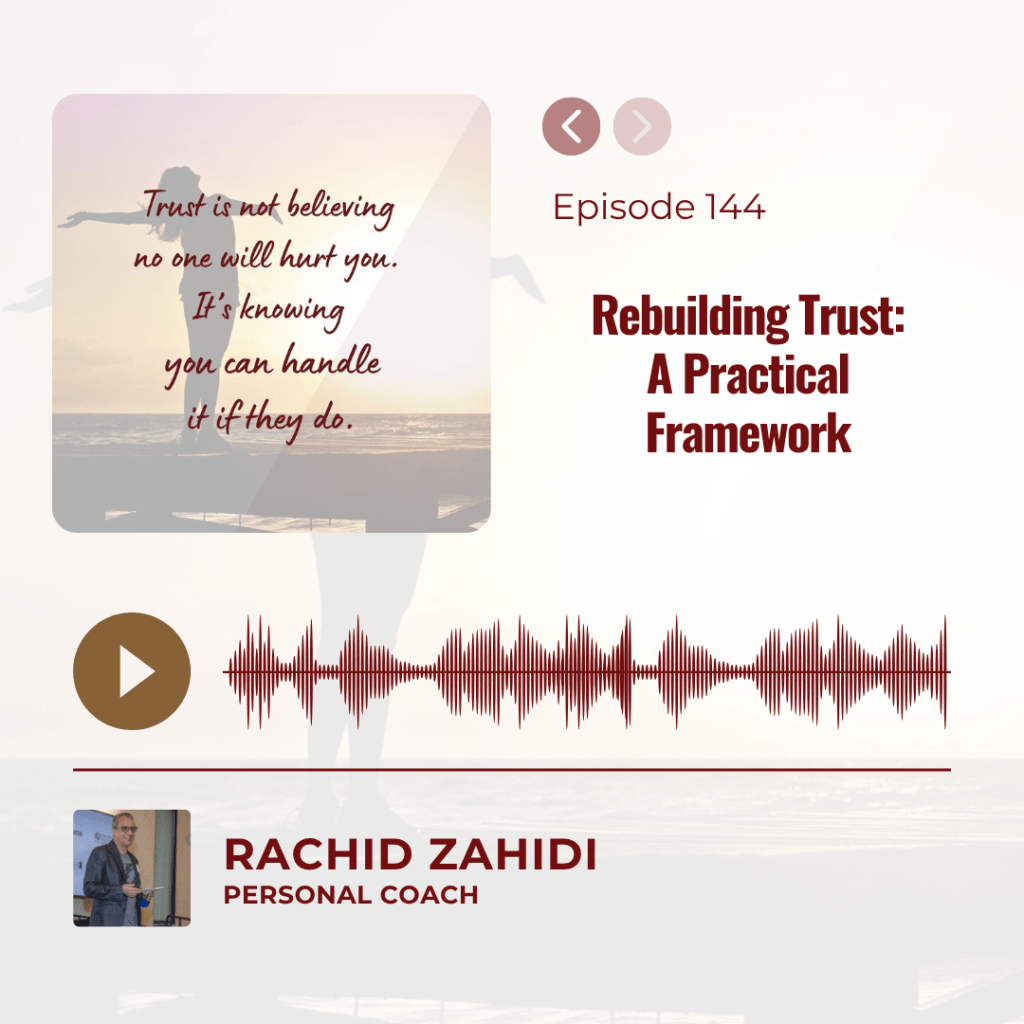
How Trusting Again Becomes a Source of Emotional Strength
In this episode of Resilience Across Borders, we’re unpacking a difficult but necessary topic: how to trust again after failure or betrayal. We often think trust is something that should come naturally, but when it’s broken, whether in relationships, business, or personal decisions, it doesn’t just affect how we see others. It reshapes how we see ourselves.
Betrayal fractures more than connection. It disrupts your internal sense of safety. You begin to question your judgment, replay what you missed, and either become hypervigilant or emotionally withdrawn. From a psychological standpoint, this is your brain trying to protect you by activating threat detection systems and scanning for danger everywhere.
But rebuilding trust is not about blind optimism or pretending the past didn’t happen. It’s a structured, intentional process. It’s about developing emotional confidence, the ability to trust that no matter what happens, you can handle it, learn from it, and move forward without losing yourself.
This episode is about rebuilding from the inside out. I’ll walk you through practical strategies to help you separate your identity from painful experiences, rebuild self-trust, process emotions effectively, and re-engage with others without losing discernment.
Trust isn’t about certainty. It’s about informed vulnerability.
🎓 What You’ll Learn in This Episode:
- Separating the Event from Identity: Understand why we tend to internalize failure or betrayal and how to stop turning painful experiences into self-condemnation.
- Rebuilding Self-Trust First: Learn why trusting yourself is the foundation for trusting others, and how small, consistent actions rebuild internal reliability.
- Guardedness vs. Wisdom: Discover the difference between healthy discernment and emotional shutdown and how to observe rather than assume.
- Processing vs. Suppressing Emotions: Why unprocessed pain turns into fear and suspicion, and how to convert emotional experiences into insight and growth.
- Redefining Trust: Shift from unrealistic expectations (“they will never hurt me”) to a healthier model based on boundaries, awareness, and response.
- Graduated Vulnerability: How to slowly reopen yourself to connection through layered, intentional sharing.
- Learning Without Cynicism: Extract lessons from betrayal or failure without adopting the belief that everyone or everything will end the same way.
- Tolerance for Uncertainty: Why trust always involves risk and how building comfort with uncertainty strengthens emotional resilience.
- Forgiveness with Boundaries: Understand forgiveness as a personal release, not automatic reconciliation.
- Accepting the Risk of Trust: Recognize that avoiding trust also has consequences, and that growth requires measured openness.
💡 Key Takeaways:
- Trust Is Built, Not Assumed: Rebuilding trust requires intention, not blind faith.
- Self-Trust Is the Foundation: Your ability to trust others depends on your confidence in yourself.
- Emotions Must Be Processed: Suppressing pain prolongs it; processing it transforms it.
- Discernment Over Naivety: Healthy trust involves observation, boundaries, and awareness.
- Uncertainty Is Inevitable: Emotional strength comes from learning to navigate risk, not eliminate it.
🧘 Practical Reflections
- The Two-Column Exercise: Write down what happened versus what you’re making it mean about yourself—and challenge those assumptions.
- The Self-Trust Practice: Make one small commitment to yourself and follow through. Build internal credibility.
- The Emotional Check-In: Pause and ask: What am I feeling? Where do I feel it? What does it need?
- The Observation Mindset: Instead of labeling people quickly, observe patterns. Do actions align with words?
💬 Quotes from the Episode
- “Trust is not certainty. It is informed vulnerability.”
- “Betrayal doesn’t just break relationships—it breaks assumptions.”
- “You don’t just lose trust in others. You can lose trust in yourself.”
- “Emotions processed become wisdom. Emotions suppressed become walls.”
- “Trust after betrayal is not innocence restored—it is confidence earned.”
Featured Tool
The EMO Gym Journal (Emotional Gym)
A guided workbook designed to help you gain clarity, stay focused on your priorities, build better habits, and track both growth and rest.
Resources & Links
- 📘 EMO Gym Journal — Available on Amazon
- 🌐 Blog & Episodes: resilienceacrossborders.com
- 🎧 Resilience Across Borders Podcast — New episodes weekly
If this episode resonated with you, please:
- Share it with someone who needs permission to pause
- Leave a review to help others find the podcast
- Subscribe so you don’t miss future episodes
Remember: be kind to yourself, be kind to others—and stay resilient. 🌊✨
Listen on Apple Podcasts/ iTunes:
Listen on Spotify:
 The Blog of Rachid Zahidi
Leave a comment